
A carjacking charge under California Penal Code § 215 is one of the most serious felonies you can face short of homicide. It's a violent felony, a "strike" under California's Three Strikes law, and carries a state prison term of 3, 5, or 9 years — before any firearm or gang enhancement is added. If you've been arrested for carjacking anywhere in Los Angeles County, the decisions you make in the next few days matter enormously. Chudnovsky Law brings together former prosecutors and defense trial lawyers with more than 113 years of combined experience and over 9,000 cases handled.
Charged with carjacking in Los Angeles? Call Chudnovsky Law now. Our team includes former Deputy District Attorneys who once filed and tried these exact cases — now we use that inside knowledge to dismantle them. We defend clients at the Clara Shortridge Foltz Criminal Justice Center and courthouses across LA County, and we're rated 5 stars on Google across our Los Angeles, Orange County, and Long Beach offices. Free, confidential consultation, 24/7: (213) 212-5002.
On This Page:
- What carjacking means
- Penalties and strikes
- Why local experience matters
- What it costs
- Our defense method
- Defenses that work
- Carjacking vs robbery
- LA court guide
- Our promises to you
- Frequently asked questions





What Counts as Carjacking Under California Penal Code § 215?
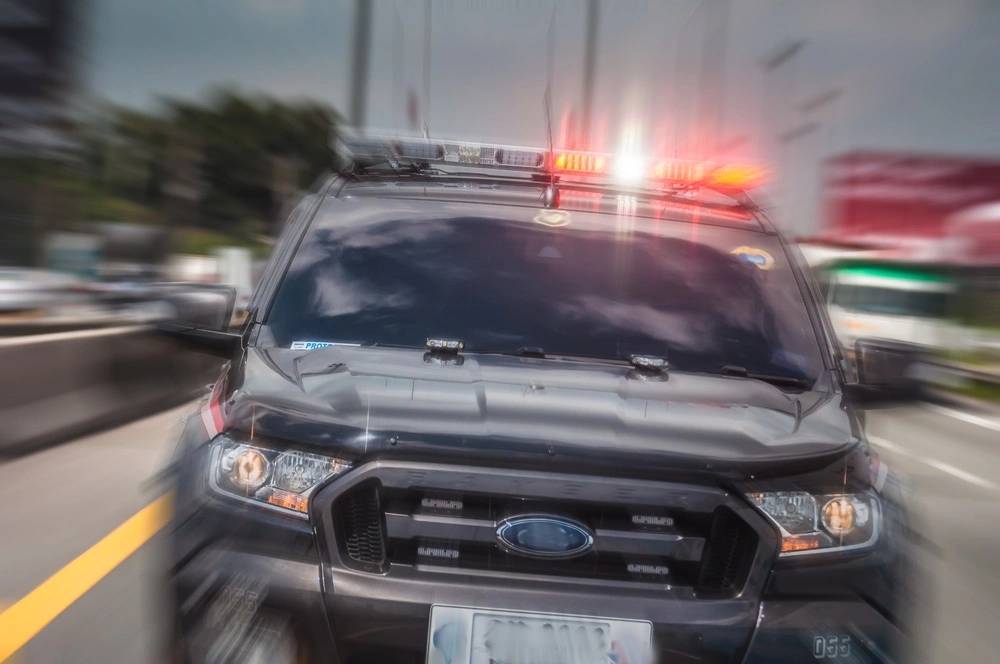
Carjacking is the felonious taking of a motor vehicle from the person or immediate presence of its possessor, against their will, accomplished by force or fear, with intent to either permanently or temporarily deprive them of the vehicle (Cal. Penal Code § 215). That last part surprises people — you don't have to intend to keep the car. Taking it temporarily is enough.
Here's what most people don't realize. Carjacking is a separate, harsher crime than auto theft precisely because of the force-or-fear element directed at a person. There is no misdemeanor version of carjacking — it is always a felony, and it is always a strike.
The prosecution must prove every one of these elements beyond a reasonable doubt:
- A vehicle was taken that was not yours
- It was taken from another person's immediate presence
- The possessor didn't consent
- You used force or fear to take it or keep it
- You intended to deprive that person of the vehicle, even briefly
Immediate presence means the vehicle was close enough that the victim could have kept possession if not for the force or fear used against them. A car parked across a lot while the owner stands at an ATM can still qualify.
The "force or fear" requirement is where many cases live or die. Fear in this context means the victim was actually afraid, or that a reasonable person in their position would have been. A raised voice, an implied threat, a hand near a waistband — prosecutors argue these all qualify. We argue the opposite, and the surveillance footage and 911 audio often agree with us.
Key insight: A genuine misunderstanding over who had the right to a vehicle — a co-owner, a borrowed car, a repossession dispute — is not carjacking, because the intent and consent elements collapse. Kareem Aref, a former Deputy District Attorney who prosecuted violent felonies before joining the defense bar, focuses first on whether the State can actually prove force, fear, and intent, or whether it's papering over a weaker theft or dispute case.
If the facts of your arrest don't cleanly match all five elements, you may be facing a charge the prosecution can't sustain. Call (213) 212-5002 to have a former prosecutor review what they actually have.
How Bad Are the Penalties for PC 215 in Los Angeles?
A first-time carjacking conviction carries 3, 5, or 9 years in California state prison, plus a "strike" on your record under the Three Strikes law. That strike follows you for life. If you're ever convicted of another felony, that second offense doubles, and a third strike can mean 25 years to life.
But the base term is only the starting point. Carjacking is one of the most enhancement-heavy charges in the Penal Code, and prosecutors stack them aggressively.
Roughly 1 in 4 carjacking cases we review involves a firearm allegation that dramatically changes the sentencing exposure — based on our case experience handling violent felonies across Southern California.
| Enhancement | Statute | Added Term | When It Applies |
|---|---|---|---|
| Personal firearm use | Cal. Penal Code § 12022.53 | +10 / +20 / +25-to-life | Using, firing, or causing injury with a gun |
| Great bodily injury | Cal. Penal Code § 12022.7 | +3 years (base) | Victim suffers significant physical injury |
| Gang participation | Cal. Penal Code § 186.22 | Additional years per subdivision | Crime committed to benefit a criminal street gang |
| Strike (Three Strikes) | Three Strikes law | Doubles future felony terms | Automatic on any PC 215 conviction |
The firearm enhancement under Cal. Penal Code § 12022.53 is the one that destroys lives. Personally using a firearm adds 10 years. Firing it adds 20. Causing great bodily injury with it adds 25 years to life — all consecutive to the carjacking term itself.
How much prison time could I actually face? A clean PC 215 conviction can mean 3 to 9 years. Add a fired firearm and you're looking at the base term plus 20 years consecutive. Add great bodily injury and the exposure climbs toward life. This is why early, aggressive defense isn't optional.
Collateral Consequences Beyond Prison
A carjacking conviction doesn't end at the prison gate. As a violent strike felony, it triggers loss of firearm rights for life, immigration consequences including deportation for non-citizens under 8 U.S.C. § 1227, barriers to employment and housing, and the loss of professional licenses. Our firm also includes attorneys who defend professional licenses, so we understand exactly how a felony conviction ripples into every part of a client's life.
The stakes here are not abstract. They are measured in decades. That's why the framework you choose for your defense matters more than any promise a lawyer makes.
Why Does Local Los Angeles Experience Matter in Carjacking Cases?
Carjacking prosecutions in Los Angeles are handled differently than almost anywhere else in California, and a lawyer who knows the local terrain has a real advantage. The LA County District Attorney maintains specialized units for gang and gun cases, and carjacking files routinely get routed into them.
Most felony carjacking cases originating in central and downtown Los Angeles are arraigned and tried at the Clara Shortridge Foltz Criminal Justice Center at 210 W. Temple Street. Cases from the eastern part of the county move through the East Los Angeles Courthouse. Knowing which deputy DAs staff which courtrooms, how individual judges weigh strike-stipulation negotiations, and how local juries respond to surveillance evidence shapes every strategic decision we make.
In our experience, carjacking allegations in Los Angeles cluster heavily around freeway on-ramps and off-ramps — corridors like the 101 through downtown, the 110, and the 10 — where vehicles slow and stop. That geography matters, because these locations are saturated with traffic cameras, business surveillance, and Caltrans footage. The same cameras prosecutors use to identify a defendant frequently contain the timeline gaps and angle problems that undermine the State's narrative.
Local knowledge isn't a marketing line. It's the difference between a lawyer who knows that a particular courtroom favors early disposition and one who walks in blind. As a former Deputy District Attorney who tried cases in these buildings, Kareem Aref reads the room before he reads the file.
If your case is headed to a specific LA County courthouse, we can tell you what to expect there. Call (213) 212-5002.
What Does It Cost to Hire a Carjacking Defense Lawyer in Los Angeles?
Your first consultation with Chudnovsky Law is completely free and confidential — there's no obligation and no commitment to retain us. We'll listen to what happened, explain your exposure honestly, and walk you through the fee structure before you decide anything.
Worried about cost? That's the most common reason people delay calling, and delay is the costliest mistake in a strike case. Here's the honest math: the price of a felony carjacking conviction — years of lost income, a permanent strike, lost firearm and immigration status — dwarfs the cost of mounting a real defense.
We discuss every fee in writing during your consultation. Depending on the complexity of the charges, many matters can be structured so you understand the total cost upfront, and we offer payment-plan options to make serious defense accessible. We don't gatekeep — every consultation is a genuine conversation about what you're facing, not a sales pitch.
Three things determine the scope of a carjacking defense: the number of charges and enhancements filed, whether the case is heading toward trial or resolution, and how much investigation the evidence demands. We'll be straight with you about all three.
Money should never be the reason someone faces a strike felony without a skilled defense. Call (213) 212-5002 and let's talk through your options.
The PROSECUTOR'S-LENS Defense Method

We built our carjacking defense around a simple advantage: several of our attorneys spent years as prosecutors deciding which of these cases to file and how to win them. We call our approach the PROSECUTOR'S-LENS Method, and it runs in five stages.
1. Pressure-Test the Filing
Before anything else, we examine the case the way the DA's filing deputy did. Does the evidence actually support force or fear? Is the "immediate presence" element real, or is this a stretched auto-theft case dressed up as a carjacking? In our experience, the weakest carjacking files are the ones charged reflexively when a vehicle and a confrontation happen to overlap. We find those gaps first.
2. Reconstruct the Evidence Timeline
Carjacking cases in LA live and die on video. We move fast to preserve surveillance from businesses, traffic cameras, and rideshare or doorbell footage along the route — much of it overwritten within 30 to 90 days. We pull the 911 audio, dispatch logs, and body-worn camera footage. The goal is to build an independent timeline before the evidence decays.
3. Attack Identification
Carjackings are often chaotic, fast, and poorly lit. Eyewitness identification under those conditions is notoriously unreliable. We scrutinize show-up procedures, photo lineups, and any suggestive police conduct that tainted the ID.
4. Neutralize the Enhancements
The base charge is dangerous, but the enhancements are what put clients in prison for decades. We attack firearm allegations under Cal. Penal Code § 12022.53 and gang allegations under Cal. Penal Code § 186.22 separately and aggressively. Stripping an enhancement can cut a client's exposure by decades even before we address the underlying charge.
5. Position for the Best Resolution
About 90 to 95% of criminal cases resolve before trial. With a former Deputy District Attorney leading the defense, our negotiations carry credibility — the DA knows we can try the case if pushed, and that we understand exactly how weak their position may be. Where the evidence is weakest, we pursue reductions, strike dismissals, and dismissal of the most serious counts.
This method isn't theory. It comes from having sat in the prosecutor's chair. Call (213) 212-5002 to put it to work on your case.
What Defenses Actually Work Against a PC 215 Charge?
The strongest carjacking defense usually attacks the force-or-fear or intent element, because those are the hardest things for the prosecution to prove and the easiest to misread from a police report. Here's what most people charged with carjacking don't realize: a conviction requires all five elements, and the State frequently can't nail down every one.
Mistaken identity. Carjackings happen fast and often in poor lighting. If the identification rests on a shaky show-up or a suggestive lineup, the entire case can come apart.
Lack of force or fear. If the vehicle was taken without any threat or intimidation directed at a person, the crime may be auto theft under the Vehicle Code — a far less serious offense — rather than carjacking.
Claim of right or consent. Disputes over a co-owned car, a borrowed vehicle, a repossession, or an ongoing relationship between the parties can defeat the consent and intent elements entirely.
No intent to deprive. If you genuinely believed you had a right to the vehicle, or never intended to take it from the person, the intent element fails.
Insufficient immediate presence. If the possessor wasn't close enough to the vehicle for the "immediate presence" element to apply, the charge may not hold.
Suppression motion — a pre-trial request asking the court to exclude evidence police obtained through an unlawful search, a coerced statement, or a Miranda violation. If a key statement or piece of evidence is suppressed, the prosecution's case can collapse before trial.
Can a carjacking charge be reduced? Yes, in the right circumstances. Where the force or fear is weak, we push to have the charge reduced to grand theft auto or a lesser theft offense that carries no strike. Where an enhancement is poorly supported, we move to strike it. Every case is different, but reducing exposure is often where the real victory lives.
Constitutional protections matter here. The Fourth Amendment governs how police can search you and your vehicle. The Fifth Amendment protects you from being forced to incriminate yourself. The Sixth Amendment guarantees you a lawyer. When police cut corners — and in fast-moving carjacking arrests, they often do — those violations become defense use.
What's the Difference Between Carjacking and Robbery?
Carjacking and robbery overlap, but they're charged under different statutes with different penalties, and prosecutors sometimes charge both. Understanding the distinction can directly affect your sentence.
Robbery under Cal. Penal Code § 211 is taking any personal property from a person by force or fear. Carjacking is the specific act of taking a vehicle the same way. The key practical difference is that California law generally prohibits punishing someone for both robbery and carjacking arising from the same act of taking the same vehicle — though prosecutors may charge both and let the court sort it out.
| Offense | Statute | Sentence | Strike? |
|---|---|---|---|
| Carjacking | PC 215 | 3, 5, or 9 years | Yes |
| Second-degree robbery | PC 211 | 2, 3, or 5 years | Yes |
| First-degree robbery | PC 211 | 3, 4, or 6 years | Yes |
| Grand theft auto | Veh. Code § 10851 | 16 months, 2, or 3 years | No |
Notice the bottom row. Grand theft auto carries no strike and far less prison exposure. One of the most valuable outcomes in a carjacking case is reducing it to a vehicle theft charge that eliminates the strike entirely. That's why we attack the force-or-fear element so hard — it's the line between a strike felony and a non-strike offense.
Why does the strike matter so much? A strike isn't just about this case. It permanently changes the math on every future interaction with the criminal justice system, doubling any later felony sentence and exposing you to a third-strike life term. Avoiding the strike is often as important as avoiding prison time on the current charge.
If you're facing both robbery and carjacking counts, you need a lawyer who understands how these statutes interact. Call (213) 212-5002.
Defending Carjacking Cases in Los Angeles County Courts
Most central Los Angeles felony carjacking cases are prosecuted at the Clara Shortridge Foltz Criminal Justice Center, the primary felony courthouse for downtown and central LA, located at 210 W. Temple Street. Cases from the eastern county are handled at the East Los Angeles Courthouse at 4848 E. Civic Center Way. Westside-area felonies may move through the Airport Courthouse near LAX on La Cienega Boulevard.
Each venue has its own rhythm. Arraignment is your first court appearance, where the formal charges are read and you enter a plea. For someone in custody on a felony, California requires arraignment without unnecessary delay — generally within 48 hours of arrest, excluding weekends and holidays. Missing the strategic opportunities at this early stage can cost you use you never get back.
After arraignment comes the preliminary hearing — a proceeding where a judge decides whether the prosecution has enough evidence to hold you for trial. This is a critical battleground. It's our first chance to cross-examine the State's witnesses under oath, expose weaknesses in the identification, and sometimes get charges or enhancements knocked out before trial even begins.
The LA County District Attorney brings significant resources to violent felony cases, and the LA County Sheriff's Department and LAPD often build these files with extensive surveillance and witness canvassing. Local judges in these courtrooms tend to take strike allegations seriously, which makes the credibility of your defense team in negotiations all the more important.
We know these buildings, these prosecutors, and these procedures. That familiarity translates directly into better-informed strategy for your case.
Our Three Promises to Every Carjacking Client

When the stakes include decades in prison and a lifelong strike, you deserve more than vague assurances. Here's what we commit to, specifically.
First, a former prosecutor reviews your case. You won't be handed off to an inexperienced associate. Attorneys who have actually filed and tried violent felonies — including Kareem Aref, a former Deputy District Attorney — are directly involved in evaluating your defense. That perspective is what lets us see the case the way the DA does.
Second, we move fast on evidence. Surveillance footage in LA carjacking cases is routinely overwritten within 30 to 90 days. We commit to immediate preservation efforts so the video that could clear you doesn't vanish. The 72-hour window after we're retained is when the most decay-sensitive work happens.
Third, we communicate in plain language. No legalese, no disappearing for weeks. You'll understand your exposure, your options, and your next steps at every stage. Our 5-star ratings across Google, our 10.0 Superb rating on AVVO, and our Top 100 Trial Lawyers recognition from the National Trial Lawyers Association reflect a track record clients can verify.
With over 9,000 cases handled and we're equipped to defend Angelenos from every community. Call (213) 212-5002 for a free, confidential consultation, available 24/7.
The information on this page is for general informational purposes and does not constitute legal advice. Every case is unique, and past results do not guarantee future outcomes. Contact a qualified attorney to discuss your specific situation.
Don't Wait — A Strike Charge Demands Immediate Action
A carjacking charge under PC 215 carries up to 9 years in state prison, a permanent strike, and enhancements that can push your exposure toward life. Evidence that could clear you — surveillance footage, witness recall, video timelines — degrades by the day. The deputy DA is already building their case. You need a defense team building yours.
Chudnovsky Law deploys former prosecutors and seasoned trial lawyers with over 113 years of combined experience against the charges you're facing. We defend clients throughout Los Angeles County, Orange County, Long Beach, and Santa Monica. Call (213) 212-5002 right now for a free, confidential consultation. We answer 24/7.
Frequently Asked Questions
Is carjacking always a felony in California?
Yes. Carjacking under Penal Code § 215 is always a felony — there is no misdemeanor version. It's also a "strike" under California's Three Strikes law, which means it permanently increases your sentencing exposure for any future felony. A conviction carries 3, 5, or 9 years in state prison before any enhancements.
How long do I face in prison for a carjacking conviction?
A first-time carjacking conviction carries 3, 5, or 9 years in California state prison. But enhancements can add dramatically to that. Personally using a firearm under PC 12022.53 adds 10 years, firing it adds 20, and causing great bodily injury with it adds 25 years to life — all consecutive to the base term.
Can a carjacking charge be reduced to a lesser offense?
In the right circumstances, yes. Where the prosecution can't prove the force-or-fear element, we push to reduce the charge to grand theft auto under Vehicle Code § 10851, which carries no strike and far less prison exposure. Eliminating the strike is often as important as reducing the prison time itself.
What's the difference between carjacking and grand theft auto?
Grand theft auto is taking a vehicle without permission. Carjacking adds the element of taking the vehicle from a person by force or fear. That force-or-fear element makes carjacking a strike felony carrying up to 9 years, while grand theft auto carries no strike and a maximum of 3 years. The line between them is often where a case is won.
How much does a carjacking defense lawyer cost in Los Angeles?
Your first consultation is free and confidential. Fees depend on the charges, the enhancements, and whether the case heads toward trial or resolution. Many matters can be structured so you know the cost upfront, and we offer payment plans. We'll discuss everything in writing during your consultation — call (213) 212-5002.
What should I do if I've been arrested for carjacking?
Exercise your right to remain silent and your right to an attorney immediately. Don't explain, don't justify, don't talk to police without a lawyer present. Anything you say can be used to build the case against you. Then call a defense attorney right away — evidence like surveillance footage degrades within 30 to 90 days.
Will my carjacking case go to trial?
Most criminal cases — roughly 90 to 95% — resolve before trial through negotiation or dismissal of weak counts. But we prepare every case as if it will go to trial. That readiness, backed by attorneys who have tried violent felonies as prosecutors, is exactly what gives us leverage in negotiations.
Which courthouse will handle my Los Angeles carjacking case?
Most central and downtown LA felony carjacking cases are heard at the Clara Shortridge Foltz Criminal Justice Center at 210 W. Temple Street. Eastern county cases go to the East Los Angeles Courthouse. The specific venue depends on where the alleged offense occurred — we can tell you what to expect at your courthouse.
Does a carjacking conviction count as a strike?
Yes. Carjacking is a violent felony and an automatic strike under California's Three Strikes law. A strike doubles the sentence on any future felony conviction, and a third strike can mean 25 years to life. This is why avoiding the strike — not just the prison time — is central to our defense strategy.
Can I claim self-defense or mistake in a carjacking case?
Possibly. If you genuinely believed you had a right to the vehicle — a co-owned car, a borrowed vehicle, or a repossession dispute — the consent and intent elements may collapse, defeating the carjacking charge. If the identification is mistaken or police violated your rights during the arrest, those defenses can be equally powerful. Every case turns on its specific facts.
What if a firearm was involved in the alleged carjacking?
Firearm allegations under PC 12022.53 carry the most severe enhancements — 10, 20, or 25-years-to-life added consecutively. We attack these allegations separately and aggressively, because stripping a firearm enhancement can cut a client's exposure by decades even before we address the underlying charge.
Chudnovsky Law - Los Angeles Office
Address: 1933 S Broadway #1100, Los Angeles, CA 90007, USA

“My felony DUI was reduced to dry reckless. I got in an accident and was arrested for a DUI. Unfortunately there was substantial injury involved and I got charged with Felony DUI. I was really freaked out by the whole thing and what the consequences could be. Tsion and her team really went above and beyond to calm me down and educate me on my options and how they would attack the charges. After some careful research, they identified some issues with the evidence and were able to able reduce the charge to a dry reckless and I kept my license. I can wholeheartedly recommend Chudnovsky Law. They are top notch!”
MARIA