A DUI arrest in Los Angeles triggers two separate cases — a criminal prosecution and a DMV administrative hearing — and you have only 10 days from the date of arrest to request a DMV hearing before your license is automatically suspended.
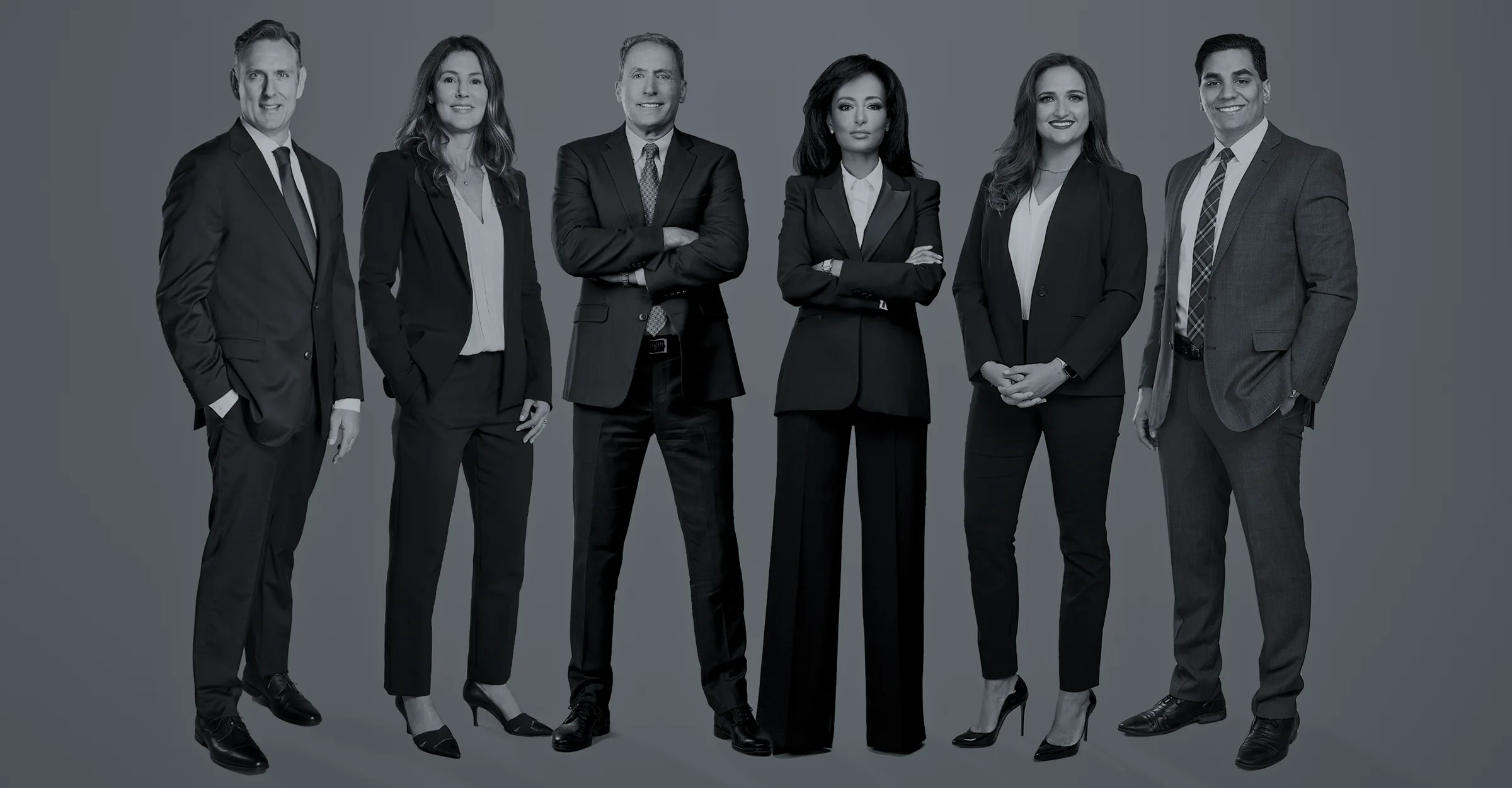
Kareem Aref, a former Deputy District Attorney who now defends DUI clients at Chudnovsky Law, brings inside knowledge of how prosecutors build their cases and where those cases break down. The firm's eight-attorney team carries over 113 years of combined legal experience across more than 9,000 cases and trials, including drunk driving charges at every level from first-offense misdemeanors to felony DUI causing injury.
Chudnovsky Law defends DUI cases across Los Angeles County from our offices in Los Angeles, Santa Monica, and Long Beach — with additional coverage in Orange County through our Newport Beach location. Our team includes attorneys who spent years on the prosecution side, giving us a playbook most defense firms simply don't have.
Call (213) 212-5002 for a free, confidential case review. We'll explain your options and our flat-fee structure on the first call — no obligation.
On This Page:
- What a DUI charge really means in LA
- The 10-day DMV deadline
- How former prosecutors defend your case
- First offense vs. repeat DUI penalties
- Felony DUI and DUI causing injury
- Drug DUI charges
- Field sobriety test challenges
- Breathalyzer and blood test defenses
- DUI diversion programs
- Los Angeles courthouses and local procedures
- What to expect when you hire our firm
- Frequently asked questions

What Does a DUI Charge Actually Mean in Los Angeles?
A DUI in California is not one charge. It's typically two. Under Vehicle Code § 23152, prosecutors can file subsection (a) — driving under the influence of alcohol — and subsection (b) — driving with a blood alcohol concentration of 0.08% or higher. These are separate counts, and the distinction matters more than most people realize.
Vehicle Code § 23152(a) is a subjective charge. It means the prosecution believes alcohol impaired your ability to drive safely. They don't need a specific BAC number to prove it. An officer's observations, dashcam footage, and your performance on field sobriety tests form the backbone of this charge.
Vehicle Code § 23152(b) is the "per se" charge. It relies on your BAC reading alone. If a chemical test showed 0.08% or above, the prosecution argues the number speaks for itself. But that number is only as reliable as the machine that produced it, the technician who calibrated it, and the officer who administered the test.
Here's what catches people off guard. Even if your BAC was below 0.08%, you can still face the (a) charge if the officer believed you were impaired. And if your BAC was right at the line — 0.08% or 0.09% — the margin of error on breathalyzer equipment becomes a serious defense issue.
Beyond the criminal case, your arrest triggers an administrative proceeding through the California DMV that can suspend your driving privileges before you ever step into a courtroom. These two tracks run simultaneously, and each requires a separate defense strategy.
Most people don't know they're fighting on two fronts until one of those fronts has already been lost.
Why Do You Only Have 10 Days to Save Your License After a DUI Arrest?
When a Los Angeles officer arrests you for DUI and confiscates your license, you have exactly 10 calendar days to contact the California DMV and request an Administrative Per Se (APS) hearing — miss that window, and your license suspension takes effect automatically 30 days after the arrest. This deadline exists under Cal. Vehicle Code § 23612, California's implied consent law, and it runs regardless of what happens in your criminal case.

The California DMV APS hearing is a separate proceeding from your criminal trial. It takes place before a DMV hearing officer — not a judge — and the standard of proof is lower. The DMV only needs to show three things: that the officer had probable cause to stop you, that the arrest was lawful, and that your BAC was 0.08% or above (or that you refused chemical testing).
Administrative Per Se hearing refers to the DMV's process for suspending driving privileges based solely on the arrest circumstances and chemical test results, independent of any criminal conviction. It's an administrative action, not a criminal one, which is why the rules and timelines differ.
Requesting this hearing is critical even if you ultimately lose it. It preserves your right to drive while the hearing is pending — which can take weeks or months. Without the request, suspension kicks in automatically on day 31. That means no legal driving to work, to school, to pick up your kids. The temporary license the officer gave you expires, and you're stuck.
Our firm handles the DMV hearing request as part of every DUI engagement. In many cases, we file it within hours of the initial consultation because every day counts against that 10-day clock.
If you were arrested this week, call (213) 212-5002 now. We can get your DMV hearing requested today.
How Do Former Prosecutors Defend DUI Cases Differently?
The difference between a defense attorney who understands prosecution strategy and one who doesn't shows up in the details — which witnesses get subpoenaed, which motions get filed, and which weaknesses in the case get targeted first.
Kareem Aref spent years as a Deputy District Attorney prosecuting criminal cases before joining Chudnovsky Law's defense team. That means he knows the internal playbook: how filing deputies evaluate the strength of a DUI arrest, what evidence they consider non-negotiable versus expendable, and where they're willing to negotiate. Robert K. Weinberg, the firm's Of Counsel attorney, served as a Deputy District Attorney in Orange County and has tried over 100 jury trials across more than 30 years of practice. Melissa DuChene and David A. Stein round out the DUI defense team with their own track records of securing favorable outcomes for clients facing serious charges.
The PIDA Defense Method
This is how our team approaches every Los Angeles DUI case, and it comes directly from understanding how the other side builds theirs:
P — Procedural Audit. We start by dissecting the traffic stop itself. Did the officer have reasonable suspicion to pull you over? Was the detention lawfully extended? Were Miranda rights read before custodial interrogation? A procedural failure at any stage can result in evidence being suppressed — and without that evidence, the prosecution's case weakens or collapses entirely.
I — Instrument and Evidence Challenge. Every breathalyzer device has a calibration schedule. Every blood draw has a chain-of-custody log. Every field sobriety test has a standardized protocol. We subpoena maintenance records, lab certifications, and officer training files to identify deviations. Even small deviations can undermine the reliability of the results.
D — Discovery Deep Dive. We request and review everything — dashcam footage, body-worn camera recordings, dispatch logs, the arresting officer's prior DUI reports, and any communications with supervisors. Patterns emerge. Officers who consistently report identical observations across different arrests raise credibility issues. Missing footage raises spoliation concerns.
A — Alternative Narrative Construction. Once we've identified the weak points, we build a counter-narrative. Rising BAC defense. Mouth alcohol contamination. Medical conditions that mimic impairment — GERD, diabetes, inner ear disorders. Physical conditions that affect balance during field sobriety tests. The goal is not just to poke holes but to present a coherent, credible alternative explanation for every piece of evidence the prosecution relies on.
This methodology is possible because we've sat on the other side of the table. We know what prosecutors expect — and we know exactly where they're unprepared for a fight.
What Are the Penalties for a First DUI Offense in Los Angeles?
A first-offense DUI under Vehicle Code § 23152 is a misdemeanor in California, but "misdemeanor" doesn't mean minor. A first DUI conviction carries up to 6 months in county jail, fines and assessments totaling $3,600 or more, a 6-month license suspension, mandatory DUI school (typically a 3-month program), and 3 to 5 years of informal probation.
The average all-in cost of a first DUI — including fines, legal fees, DUI school, increased insurance premiums, and other expenses — runs between $10,000 and $15,000 (NHTSA, 2023). That doesn't account for lost income from missed work, the cost of alternative transportation during license suspension, or the long-term career impact of a criminal record.
Here's how penalties escalate with prior offenses:
| Offense | Classification | Max Jail Time | License Suspension | DUI School | Estimated Total Cost |
|---|---|---|---|---|---|
| 1st DUI | Misdemeanor | 6 months | 6 months | 3 months (AB 541) | $10,000–$15,000 |
| 2nd DUI (within 10 years) | Misdemeanor | 1 year | 2 years | 18 months (SB 38) | $15,000–$25,000 |
| 3rd DUI (within 10 years) | Misdemeanor | 1 year | 3 years (revocation) | 30 months | $20,000–$35,000 |
| 4th+ DUI (within 10 years) | Felony (VC 23550) | 16 months–3 years state prison | 4 years (revocation) | 30 months | $30,000–$50,000+ |
Informal probation (also called summary or court probation) means you report to the court rather than a probation officer. You must comply with all terms — no driving with any measurable BAC, completion of DUI school, payment of fines — or face a probation violation, which can trigger the original jail sentence.
A second DUI within 10 years adds mandatory minimum jail time (96 hours to 1 year), an 18-month DUI education program, and installation of an ignition interlock device (IID). By the third offense, judges are far less inclined toward leniency, and a fourth triggers automatic felony charges under Vehicle Code § 23550.
The question isn't whether these penalties are serious. They are. The question is what strategy gives you the strongest chance of reducing or avoiding them.
When Does a DUI Become a Felony in Los Angeles?
Most DUI charges in Los Angeles are misdemeanors. But three circumstances push a DUI into felony territory, and the consequences jump dramatically.
Felony DUI applies when: (1) it's your fourth DUI within 10 years, (2) you have a prior felony DUI conviction regardless of how long ago it occurred, or (3) the DUI caused injury or death to another person. Each path carries different penalties.
A fourth-offense felony DUI under Vehicle Code § 23550 can result in 16 months, 2 years, or 3 years in state prison — not county jail. That's a real prison sentence with lasting collateral consequences: loss of voting rights while incarcerated, firearm restrictions, and a felony record that follows you through every job application, housing application, and background check for the rest of your life.
DUI causing injury under Vehicle Code § 23153 is a "wobbler" — it can be charged as either a misdemeanor or felony at the prosecutor's discretion. Felony DUI with injury carries 2 to 4 years in state prison, plus an additional and consecutive 1 to 6 years depending on the number of victims injured. If the injuries qualify as "great bodily injury," a sentencing enhancement under Penal Code § 12022.7 adds 3 to 6 additional years.
The most serious alcohol-related driving charges involve fatalities. Gross vehicular manslaughter while intoxicated under Penal Code § 191.5(a) carries 4, 6, or 10 years in state prison. And in cases involving extreme recklessness, prosecutors can pursue a second-degree murder charge under the Watson murder theory — based on the legal principle that a driver who has been warned about the dangers of drunk driving (such as through a prior DUI conviction) acts with implied malice when they kill someone while driving under the influence.
Key insight: In Los Angeles County, the filing deputy's decision to charge a wobbler as a felony versus misdemeanor often depends on factors beyond the statutory elements — the severity of injuries, the defendant's criminal history, the BAC level, and even the specific courthouse where the case is filed. Our experience across LA County courthouses helps us anticipate which direction filing decisions will go and prepare accordingly.
Can You Be Charged with DUI for Drugs in Los Angeles?
Yes. Vehicle Code § 23152(f) makes it illegal to drive under the influence of drugs — any drug, including prescription medications, marijuana (even with a valid medical card), and over-the-counter drugs that impair your ability to drive. Vehicle Code § 23152(g) covers driving under the combined influence of alcohol and drugs.
Drug DUI cases present unique challenges for both sides. Unlike alcohol, there's no universally accepted "per se" impairment level for most drugs. A blood test might show the presence of THC, but THC can remain detectable for days or weeks after the impairing effects have worn off. This creates a genuine scientific dispute about whether a positive drug test proves impairment at the time of driving.
Prosecutors rely heavily on Drug Recognition Experts (DREs) — officers who have completed a specialized training program to identify drug impairment through a 12-step evaluation protocol. But DRE evaluations are subjective, and the training itself has drawn criticism from toxicologists and defense experts regarding its scientific reliability.
What most people miss: The rising popularity of prescription medications for anxiety, pain, and sleep disorders means more people are driving with drugs in their system than ever before. If a medication's label says "may cause drowsiness" and you're pulled over driving erratically, that's enough for a drug DUI investigation — even if you've been taking the medication as prescribed for years.
Our defense approach for drug DUI cases targets the weakest link in the prosecution's chain: the connection between the substance detected and actual impairment at the time of driving. We challenge DRE qualifications, blood draw procedures, lab testing methodology, and the scientific basis for impairment conclusions.
If you're facing drug-related DUI charges, call (213) 212-5002. The defense strategies differ significantly from alcohol-based DUI, and the earlier we begin, the more options remain on the table.
How Reliable Are Field Sobriety Tests — and Can They Be Challenged?
Standardized Field Sobriety Tests (SFSTs) are a battery of three physical exercises — the Horizontal Gaze Nystagmus (HGN) test, the Walk-and-Turn test, and the One-Leg Stand test — developed by the National Highway Traffic Safety Administration to help officers detect alcohol impairment during roadside stops. They are not pass/fail exams. They are observational tools, and they are far less reliable than most people assume.
According to NHTSA's own validation studies, the three-test battery is approximately 91% accurate at identifying drivers above 0.08% BAC when administered under controlled conditions by properly trained officers. That sounds impressive until you unpack the caveats.
"Controlled conditions" means a flat, dry, well-lit surface with the subject wearing reasonable footwear. The shoulder of the 101 Freeway at 1:00 AM doesn't qualify. Neither does a sloped parking lot on Sunset Boulevard with headlights flashing from passing traffic. Environmental factors — uneven pavement, wind, rain, darkness, flashing police lights causing distraction — all degrade test reliability.
"Properly trained officers" means the tests must be administered exactly according to the NHTSA protocol. Deviations are common: incorrect instructions, failure to ask about medical conditions that affect balance, ending the test early, or combining clues from different tests. Any deviation from the standardized protocol renders the results non-standardized — and that distinction matters enormously in court.
Medical and physical conditions produce false positives at alarming rates. Inner ear disorders, back injuries, knee problems, neurological conditions, obesity, anxiety, and even age over 65 can cause failures on the Walk-and-Turn and One-Leg Stand tests that have nothing to do with alcohol. The HGN test can show positive results from certain medications, head trauma, or eye conditions.
Our firm requests the arresting officer's SFST training records, certification dates, and prior arrest reports to identify pattern issues. An officer who reports identical "clue" observations across dozens of different subjects is recording a template, not genuine observations.
What Defenses Work Against Breathalyzer and Blood Test Results?
The prosecution treats chemical test results as near-bulletproof evidence. They're not. Both breathalyzer and blood tests are vulnerable to specific, well-documented challenges that can undermine their reliability.
Breathalyzer Defenses:
Rising BAC is one of the most effective defenses in borderline cases. Alcohol takes time to absorb into the bloodstream — roughly 30 to 90 minutes depending on body weight, food consumption, and metabolism. If you had your last drink shortly before driving, your BAC may have been below the legal limit while you were actually behind the wheel but rose above 0.08% by the time the breathalyzer test was administered 20, 30, or 45 minutes later. The law prohibits driving with a BAC of 0.08% or above — not having a BAC of 0.08% an hour after you stopped driving.
Mouth alcohol contamination occurs when residual alcohol in the mouth — from recent drinking, belching, gastric reflux (GERD), or use of certain mouthwashes and medications — inflates the breathalyzer reading. Officers are supposed to observe the subject for 15 minutes before administering the test to ensure nothing enters the mouth. In practice, this observation period is frequently incomplete or poorly documented.
Calibration and maintenance failures affect machine accuracy. California's Title 17 regulations require breath testing instruments to be calibrated according to a specific schedule and maintained in documented working order. We subpoena calibration logs, accuracy check records, and maintenance histories. Gaps, missed calibrations, or out-of-tolerance readings raise questions about every result produced during that period.
Blood Test Defenses:
Blood testing is generally considered more accurate than breath testing, but it introduces its own vulnerabilities. Chain of custody issues arise when blood samples are improperly labeled, stored at incorrect temperatures, or handled by untrained personnel. Fermentation can occur if blood samples are not properly preserved with anticoagulant and preservative, potentially producing alcohol in the vial itself — a phenomenon known as in vitro alcohol production.
Blood draws must be performed by qualified personnel under sanitary conditions. An improperly drawn sample — or one drawn without a valid warrant or lawful consent — may be suppressible.
| Test Type | Common Defense | How It Works | When It Applies |
|---|---|---|---|
| Breathalyzer | Rising BAC | BAC was below 0.08% while driving, rose above by time of test | Last drink within 1 hour of driving |
| Breathalyzer | Mouth alcohol | Residual alcohol inflated reading above true BAC | GERD, recent belching, mouthwash use |
| Breathalyzer | Calibration failure | Device not properly maintained per Title 17 | Missing or irregular calibration records |
| Blood test | Fermentation | Improper preservation created alcohol in the sample | Delayed testing, improper storage |
| Blood test | Chain of custody | Sample handling gaps undermine reliability | Missing logs, unlabeled samples |
| Blood or Breath | Unlawful collection | Test obtained without valid consent or warrant | No implied consent advisement, warrantless forced draw |
The science behind DUI testing is real, but so are its limitations. Every test result is only as trustworthy as the equipment, the technician, and the protocol behind it.
What Is the DUI Diversion Program, and Do You Qualify?
California's DUI diversion program, codified under Penal Code § 1001.95, allows certain first-time DUI defendants to avoid a conviction entirely by completing a set of court-ordered conditions. If you successfully finish the program, the charges are dismissed and no DUI conviction appears on your criminal record.
Diversion in the criminal justice context means the court diverts your case out of the traditional prosecution track and into a program. If you complete the program's requirements, the case is dismissed. If you don't, the case resumes where it left off, and you face the original charges.
The standard requirements typically include completion of a DUI education program, community service or community labor, restitution to any victims, regular check-ins with the court, and maintaining no new criminal violations during the diversion period (usually 12 to 24 months).
Not everyone qualifies. Diversion is generally available only for first-time DUI offenders with no prior DUI history and where the offense did not involve injury to another person. But eligibility is ultimately at the judge's discretion, and individual courthouses across Los Angeles County apply the criteria with varying degrees of strictness.
Why this matters more than you think: A DUI conviction stays on your criminal record and your driving record. It affects professional licensing applications, background checks for employment, immigration status for non-citizens, and insurance rates for years. Diversion offers a genuine path to keeping your record clean — but only if you know it's available and your attorney raises it at the right time.
Not sure if you qualify? That's exactly the kind of question a free case review is designed to answer. We'll look at the specifics of your arrest and tell you straight whether diversion is realistic for your situation.
Which Los Angeles County Courthouses Handle DUI Cases — and Why Does It Matter?
Los Angeles County is the largest county court system in the nation, with over 40 courthouses. Your DUI case will be assigned to the courthouse nearest to the location of your arrest, and courthouse assignment affects your case more than most defendants realize.
The Metropolitan Courthouse at 1945 S. Hill Street in downtown Los Angeles handles a massive volume of misdemeanor cases, including DUIs. The Airport Courthouse at 11701 S. La Cienega Boulevard covers arrests along the I-405 corridor, Westside, including arrests on Pacific Coast Highway and along the Santa Monica Freeway (I-10), and near LAX — one of the highest-volume DUI arrest zones in the county due to the concentration of bars and restaurants in Santa Monica, Culver City, Inglewood and the surrounding area. The Long Beach Courthouse at 275 Magnolia Avenue serves the southern portion of the county. The Torrance Courthouse at 825 Maple Avenue handles cases in the South Bay, including arrests in Redondo Beach, Hermosa Beach, Marina Del Rey, and Palos Verdes.
Each courthouse has its own local culture. Filing deputies at some courthouses are more receptive to plea negotiations on first offenses. Others have judges who strictly enforce maximum penalties for repeat offenders. Some courts have established DUI-specific calendars with dedicated prosecutors who handle nothing but DUI cases — making them highly experienced but also less flexible.
In the San Fernando Valley, the Van Nuys Courthouse at 14400 Erwin Street handles an enormous volume of DUI arrests from the 101 and 170 freeways. Traffic patterns on these corridors — particularly Friday and Saturday nights, and holiday weekends — create DUI checkpoint zones that generate a significant number of the Valley's arrests.
Knowing the courthouse means knowing the players. Chudnovsky Law attorneys handle DUI cases in all 23 Los Angeles County criminal court locations, including Alhambra, Antelope Valley, Bellflower, Burbank, Compton, Downey, El Monte, Glendale, Inglewood, Long Beach, Norwalk, Pasadena, Pomona, San Fernando, Santa Clarita, Torrance, Van Nuys, and West Covina. That familiarity — with specific judges' preferences, specific prosecutors' negotiation tendencies, and specific court scheduling practices — translates into strategic advantages that a lawyer unfamiliar with the local system simply cannot replicate.
15,000+ DUI arrests occur annually in Los Angeles County (California Office of Traffic Safety data), spread across dozens of courthouses. The volume means procedures vary. Local experience isn't a luxury. It's a requirement.
How Does a DUI Affect Your Driving Record — and For How Long?
A DUI conviction remains on your California driving record for 10 years. During that decade, any subsequent DUI arrest triggers enhanced penalties based on your prior conviction. A second DUI within 10 years of the first carries mandatory minimum jail time and an 18-month DUI education program instead of the 3-month program for first offenders.
But the driving record impact is just the beginning.
Insurance consequences hit immediately and last for years. California requires drivers convicted of DUI to file an SR-22 — a certificate of financial responsibility issued by your insurance company confirming you carry the state's minimum liability coverage. SR-22 filing requirements last 3 years from the date of conviction. During that period, your insurance premiums will increase dramatically. Industry estimates place the average annual premium increase at $1,500 to $3,000 or more, depending on your carrier and driving history.
Employment consequences vary by industry but are real. Any job requiring driving — delivery services, transportation, sales positions with company vehicles — becomes problematic or impossible with a DUI conviction and suspended license. Professional licensing boards for healthcare workers, attorneys, teachers, financial professionals, and others may require disclosure of criminal convictions, and a DUI can trigger disciplinary review.
Immigration consequences are among the most overlooked. A single DUI conviction can complicate visa renewals, green card applications, and naturalization proceedings. Multiple DUIs or a DUI involving drugs can trigger removal proceedings. Non-citizens facing DUI charges need an attorney who understands this intersection.
Ignition Interlock Device (IID) — a breathalyzer installed in your vehicle that requires you to blow into it before the engine starts and at random intervals while driving. California requires IID installation for all DUI convictions, with the duration ranging from 6 months for a first offense to 3 years for a third offense.
What Should You Expect When You Hire Chudnovsky Law for a DUI Case?
We make three specific commitments to every DUI client:
1. You'll speak with a defense attorney within 24 hours. Not an intake coordinator. Not a paralegal. An attorney who can evaluate your case and begin the DMV hearing request immediately. When the 10-day clock is ticking, speed is not optional.
2. You'll know your total cost before you retain us. Many of our DUI cases are handled on a flat fee, so you know exactly what you're paying from the start. No hourly billing surprises. No hidden costs. We discuss the fee structure during your first call, and we offer payment plans to make representation accessible. The initial consultation itself is free and carries no obligation.
3. You'll understand your case — not just your charges. We walk every client through the evidence against them, the strengths and weaknesses of the prosecution's case, every available defense strategy, and the realistic range of outcomes. Informed clients make better decisions. That's our job.
Chudnovsky Law has earned a 10.0 Superb rating on AVVO, 5-star ratings on Google across our Los Angeles, Orange County, and Long Beach locations, and 5-star peer reviews on Martindale-Hubbell. The National Trial Lawyers Association named our attorneys among the Top 100 Trial Lawyers. We've also been recognized by Expertise as among the best criminal defense lawyers in Los Angeles and Orange County.
But credentials only matter if they translate into action for your case. That's what the free consultation is for. Call (213) 212-5002. We answer calls around the clock, including weekends.
How Does California's Implied Consent Law Affect Your DUI Case?
Under Vehicle Code § 23612, every person who drives on California roads has given implied consent to submit to chemical testing if lawfully arrested for DUI. This means refusing a breath or blood test after arrest carries its own penalties — separate from and in addition to any DUI conviction.
A first-offense refusal triggers a one-year license suspension with no restricted license available. That's significantly harsher than the suspension for a first DUI conviction with a test result. A second-offense refusal within 10 years results in a two-year revocation. A third triggers a three-year revocation.
Here's the critical distinction most people miss: you have the right to refuse the preliminary alcohol screening (PAS) test — the handheld breathalyzer administered roadside before your arrest. This pre-arrest screening is voluntary for drivers over 21 who are not on DUI probation. The mandatory test is the one administered after your arrest, typically at the police station or hospital.
Officers are required to inform you about the consequences of refusal. If they fail to properly advise you — or if the arrest itself was unlawful — the refusal enhancement may be challengeable. The prosecution must prove you were told about the consequences and still chose to refuse.
Implied consent is the legal doctrine that by the act of driving on California's public roads, you have already pre-agreed to submit to chemical testing under certain conditions — specifically, upon lawful arrest for suspected DUI. It doesn't mean you have no rights; it means refusing has separate legal consequences.
What Role Do DUI Checkpoints Play in Los Angeles Arrests?
The California Highway Patrol and LAPD conduct DUI checkpoints regularly throughout Los Angeles County, particularly on holiday weekends, during major events, and along high-traffic corridors. These checkpoints are legal under both federal and California constitutional law — but only if they follow strict procedural requirements established by the California Supreme Court in Ingersoll v. Palmer (1987).
The requirements include advance public notice, a neutral mathematical formula for selecting which vehicles to stop (every third car, every fifth car — not officer discretion), adequate safety precautions, and a reasonable overall duration. Officers at checkpoints cannot detain you longer than necessary to determine whether signs of impairment exist.
Here's where defense opportunities arise: Checkpoint compliance failures are more common than you'd think. Supervisors don't always document the selection formula. Public notice isn't always published as required. Officers sometimes deviate from the predetermined stopping pattern. Any procedural failure can render the stop — and all evidence obtained from it — suppressible.
DUI checkpoint arrests along the I-10 through Santa Monica, Hollywood Boulevard on weekend nights, and stretches of Sepulveda Boulevard near LAX account for a significant portion of the DUI cases we handle. Our familiarity with these specific checkpoint locations and the agencies conducting them lets us request the right operational plans and identify compliance gaps quickly.
What Happens If You're a Rideshare or Commercial Driver Charged with DUI?
For commercial driver's license (CDL) holders, the BAC threshold drops to 0.04% — half the standard limit. A single DUI conviction results in a one-year CDL disqualification. A second conviction means lifetime disqualification. For rideshare drivers (Uber, Lyft), a DUI conviction — or even a pending DUI charge — can result in immediate deactivation from the platform.
The career consequences for professional drivers extend far beyond the criminal penalties. A truck driver, bus driver, or delivery driver who loses their CDL loses their livelihood. And unlike a standard driver's license, there is no restricted CDL option for DUI suspensions in California.
Under Vehicle Code § 23136, California also imposes a zero-tolerance rule for drivers under 21 — any BAC of 0.01% or above triggers a one-year license suspension. For underage drivers, even a single beer can result in consequences.
Our approach for commercial and professional drivers focuses on three priorities: protecting the CDL or commercial driving eligibility, pursuing every available defense to avoid conviction, and — where conviction cannot be avoided — pursuing alternative dispositions like a wet reckless reduction under Vehicle Code § 23103.5, which carries reduced penalties and does not trigger the automatic CDL consequences of a DUI conviction.
Wet reckless is a plea bargain to reckless driving involving alcohol. It's not a charge prosecutors file initially — it's a negotiated reduction from a DUI charge. It carries lower fines, shorter probation, and a shorter DUI school requirement. Most importantly for professional drivers, it may avoid certain automatic CDL consequences.
What Makes Chudnovsky Law Different from Other DUI Firms in Los Angeles?
We hear this question often, and we answer it with facts rather than slogans.
Our team includes attorneys who worked inside the prosecution system. Kareem Aref served as a Deputy District Attorney. Robert K. Weinberg prosecuted cases as an Orange County Deputy District Attorney. Other members of our team include former DOJ Deputy Attorneys General. This means we've collectively sat on both sides of the courtroom. We know how investigations are built because we used to build them.
Our case volume creates pattern recognition. With over 9,000 cases and trials handled across the firm, we've seen virtually every variation of DUI fact pattern — borderline BACs, checkpoint stops, drug DUIs, felony DUI with injury, and commercial driver cases. That breadth of experience means we rarely encounter a scenario we haven't defended before.
We actually try cases. More than 100 jury trials across the firm's history. That matters because prosecutors negotiate differently when they know the defense attorney will actually take the case to trial if the offer isn't fair. The credible threat of trial changes every negotiation.
We cover the entire Los Angeles metropolitan area from four offices. Our Los Angeles headquarters, plus offices in Santa Monica, Long Beach, and Newport Beach, means we're local to virtually every courthouse in the region. We don't commute from San Diego or the Inland Empire to appear in your courthouse — we're already there.
Approximately 1.5 million people are arrested for DUI annually in the United States (FBI Uniform Crime Report, 2022). It's one of the most common criminal charges in the country. That frequency doesn't make it less serious. It means the system is built to process DUI cases efficiently — and efficiently, from the prosecution's perspective, means convictions. You need a team built to disrupt that process.
The information on this website is for general informational purposes only and does not constitute legal advice. No warranty is made as to its accuracy or completeness. Every case is unique, and past results do not guarantee future outcomes. Please contact a qualified attorney to discuss your specific situation before taking any action.
You're reading this because something happened, and it feels overwhelming. A DUI arrest doesn't have to define what comes next. Whether it's your first charge or a more serious allegation, the defense you mount now determines the outcome for years. Chudnovsky Law's team of former prosecutors and experienced defense attorneys is ready to review your case today — free, confidential, and with no strings attached.
Call (213) 212-5002 now. We'll discuss your arrest, your options, and the flat-fee structure for your defense. The 10-day DMV deadline won't wait, and neither should you.
Frequently Asked Questions
How much does a Los Angeles DUI lawyer cost?
Many DUI attorneys in Los Angeles charge flat fees rather than hourly rates, so you know the total cost upfront. At Chudnovsky Law, we discuss the fee structure during your free initial consultation. We also offer payment plans to make defense accessible. The cost depends on case complexity — a first-offense misdemeanor DUI typically costs less than a felony DUI with injury — but you'll have a clear number before you commit to anything.
Will I go to jail for a first DUI in Los Angeles?
Jail time is possible but not automatic for a first-offense DUI. Most first-time offenders in Los Angeles County receive probation, fines, DUI school, and a license suspension rather than a jail sentence — particularly when the case is well-defended. However, aggravating factors like a very high BAC (0.15% or above), an accident, or a child in the vehicle can increase the likelihood of jail time. Effective defense strategy focuses on keeping those aggravating factors from dominating the narrative.
Can I still drive after a DUI arrest in Los Angeles?
Temporarily, yes — but only if you act fast. The officer should have given you a temporary license at the time of arrest. It's valid for 30 days. If you request a DMV APS hearing within 10 days of your arrest, your driving privileges typically remain active while the hearing is pending. If you miss the 10-day deadline, your license is automatically suspended on day 31. Call us immediately after your arrest so we can request the hearing and protect your ability to drive.
What is a "wet reckless" and is it better than a DUI conviction?
A wet reckless — formally Vehicle Code § 23103.5 — is a reduced charge negotiated as a plea bargain from a DUI. It carries lower fines, a shorter DUI school requirement, shorter probation, and generally less stigma than a DUI conviction. It still counts as a prior offense if you're arrested for DUI again within 10 years. For many defendants, especially first-time offenders with borderline BACs, a wet reckless reduction represents a significantly better outcome than a full DUI conviction.
How long does a DUI stay on my record in California?
A DUI conviction stays on your California driving record for 10 years and on your criminal record indefinitely unless expunged. The 10-year lookback period is what matters for penalty enhancement — a second DUI within 10 years of the first triggers harsher penalties. Expungement under Penal Code § 1203.4 can remove the conviction from your criminal record after you complete probation, but it does not erase the DUI from your driving record.
Should I refuse the breathalyzer test during a DUI stop in Los Angeles?
It depends on which test. The preliminary alcohol screening (PAS) test administered roadside before arrest is generally voluntary for drivers over 21 who are not on DUI probation. However, once you are lawfully arrested, California's implied consent law (Vehicle Code § 23612) requires you to submit to a chemical test — breath or blood. Refusing the post-arrest test triggers a one-year automatic license suspension and can be used as evidence against you at trial. The penalties for refusal are often worse than the penalties for a borderline test result.
Can a DUI charge be dismissed entirely?
Yes, though complete dismissal depends on the facts. Cases are dismissed when evidence is suppressed due to an unlawful stop, an improperly administered test, or a violation of your constitutional rights. Cases can also be dismissed through California's DUI diversion program (Penal Code § 1001.95) for qualifying first-time offenders who complete court-ordered conditions. Our defense strategy targets the weakest elements of the prosecution's case to pursue reductions and dismissals wherever the evidence supports them.
Does a DUI affect my immigration status?
A DUI conviction can complicate immigration proceedings. A single misdemeanor DUI alone is generally not a deportable offense, but it can trigger issues with visa renewals, green card applications, and naturalization. Multiple DUIs, a DUI involving drugs, or a DUI combined with other criminal conduct can create grounds for removal. Non-citizens facing DUI charges should consult with a defense attorney who understands the intersection of criminal and immigration law before accepting any plea.
What happens at a DMV APS hearing for a DUI?
The DMV Administrative Per Se hearing is a civil proceeding — separate from your criminal case — where a DMV hearing officer decides whether to suspend your license. The hearing focuses on three narrow issues: whether the officer had probable cause for the stop, whether the arrest was lawful, and whether your BAC was 0.08% or above (or you refused testing). Your attorney can cross-examine the arresting officer and challenge the evidence. Winning the hearing preserves your driving privileges. Losing it results in suspension, though you may qualify for a restricted license with an IID.
Can I get a DUI reduced to a non-alcohol offense?
In some cases, yes. A DUI can be reduced to a "dry reckless" (reckless driving without an alcohol component) under Vehicle Code § 23103, though this outcome is less common than a wet reckless reduction. A dry reckless does not count as a prior DUI for enhancement purposes, carries no mandatory DUI school requirement, and has a less damaging impact on insurance and employment. Achieving this reduction typically requires significant weaknesses in the prosecution's evidence — a borderline or questionable BAC reading, procedural errors, or credibility issues with the arresting officer's testimony.
How many DUI offenses will it take before I lose my license permanently?
California does not technically impose a "permanent" license revocation for DUI convictions, but the practical effect comes close. A fourth DUI within 10 years triggers a four-year license revocation. After the revocation period, you must petition the DMV for reinstatement, provide proof of completing a DUI program, maintain SR-22 insurance, and install an IID. For DUI involving death (vehicular manslaughter while intoxicated), the court can impose a permanent revocation. The path to getting your license back after multiple DUIs is long, expensive, and not guaranteed.
Chudnovsky Law - Los Angeles Office
Address: 1933 S Broadway #1100, Los Angeles, CA 90007, USA
Contact No: (213) 212-5002

“My felony DUI was reduced to dry reckless. I got in an accident and was arrested for a DUI. Unfortunately there was substantial injury involved and I got charged with Felony DUI. I was really freaked out by the whole thing and what the consequences could be. Tsion and her team really went above and beyond to calm me down and educate me on my options and how they would attack the charges. After some careful research, they identified some issues with the evidence and were able to able reduce the charge to a dry reckless and I kept my license. I can wholeheartedly recommend Chudnovsky Law. They are top notch!”
MARIA