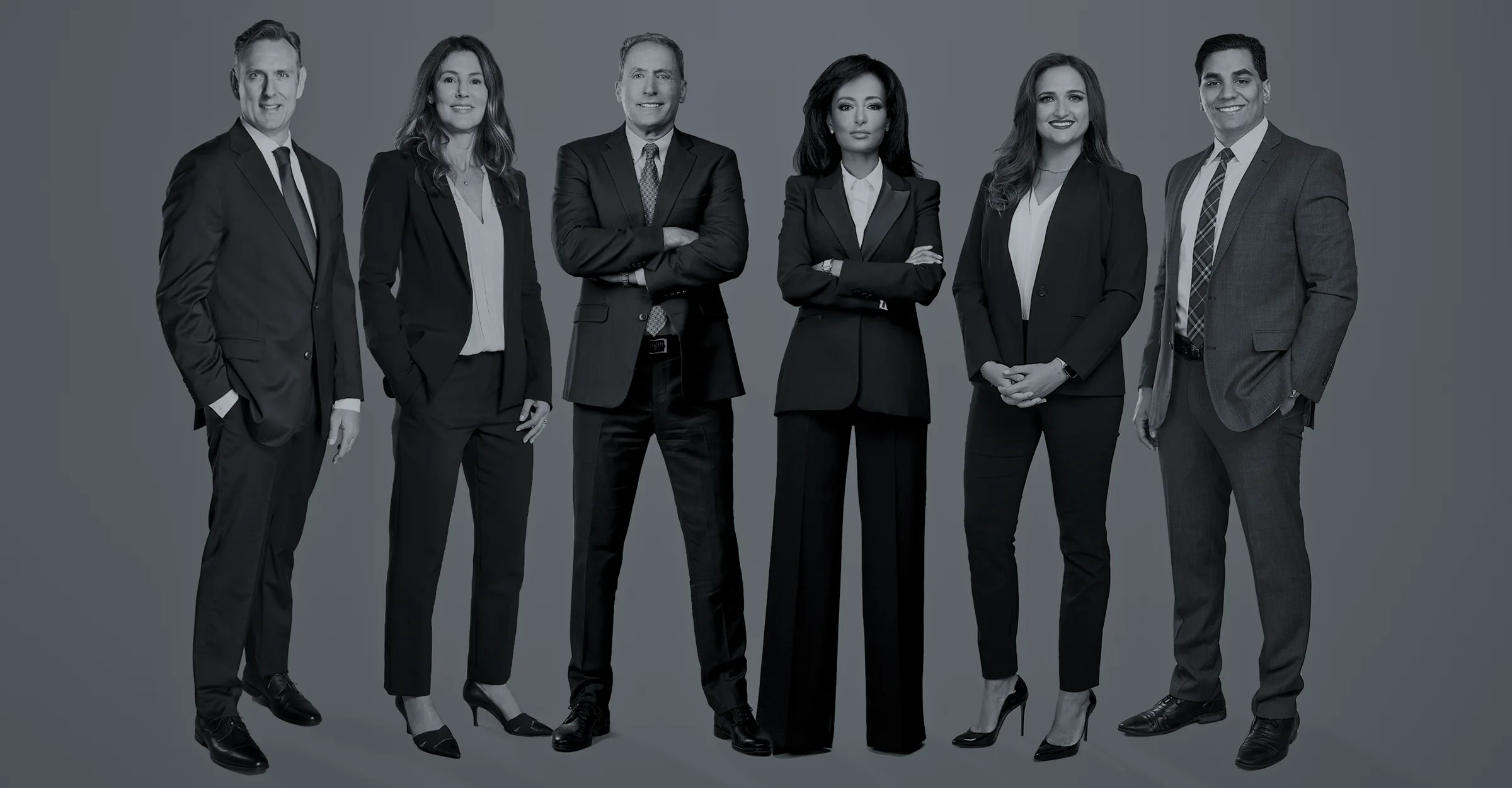
If detectives have called you, served a search warrant, or asked you to "come in and talk," you're in the pre-filing stage — the window before the District Attorney decides whether to charge you. This is the most important and most overlooked phase of any criminal case. Chudnovsky Law deploys a team with more than 113 years of combined courtroom experience and 9,000+ cases handled to intervene now, while the outcome is still open. The single biggest mistake people make is talking to police without a lawyer — statements made during a pre-filing interview are often the evidence that gets charges filed.
Get help before charges are filed. Chudnovsky Law has defended clients across all 23 Los Angeles County criminal courthouses, from the Clara Shortridge Foltz Criminal Justice Center downtown to the Airport Courthouse near LAX. Our team includes former prosecutors who know how the LA County District Attorney evaluates cases from the inside. If you're under investigation, the clock is already running. Call (213) 212-5002 now for a free, confidential consultation.
On This Page:
- Why pre-filing intervention matters
- The Prosecution Playbook Reversal
- What suspects face in LA
- Pre-file outcomes compared
- LA courts and agencies
- Our commitments to you
- Frequently asked questions

Why Hiring a Pre-Charge Attorney in Los Angeles Changes Everything

A pre-filing investigation is the period after police suspect you of a crime but before the District Attorney formally files charges in court— and it's the only stage where a defense lawyer can sometimes stop a case before it ever reaches court. Most people don't know this window exists until it's already closed.
Here's what catches people off guard. By the time a case is filed, detectives have already built it, interviewed witnesses, and secured statements. The prosecutor is reviewing a finished package. But during the pre-filing phase, the story is still being written — and a defense attorney who steps in early can shape what the DA actually sees.
Pre-filing representation means hiring a lawyer while you're a suspect or "person of interest," before any charge has been filed. Your attorney can contact investigators, present exculpatory evidence, and argue directly to the filing DA that the case is weak, incomplete, or shouldn't be charged at all.
As a former Deputy District Attorney who prosecuted criminal cases before switching to the defense side, Kareem Aref understands exactly how a filing DA weighs a case. He knows which gaps in a police report signal a rushed investigation and which weaknesses make a prosecutor hesitate. That inside view is the difference between reacting to charges and preventing them.
Key insight: In our experience, the earlier a defense lawyer enters a case, the better the outcome. Once charges are filed, the prosecutor has publicly committed — and reversing course becomes far harder. Before filing, the DA has nothing to defend and every reason to avoid a case that might fall apart.
If law enforcement has contacted you in any way, that's your signal to call. Not sure whether you actually need a lawyer yet? That's exactly what a free consultation answers — no pressure, no obligation, just a straight assessment of where you stand.
What Los Angeles Suspects Are Really Facing Before Charges Are Filed
The pre-filing stage feels deceptively calm. No court date, no formal accusation — just a detective who "wants to clear a few things up." That calm is the trap.
Anything you say during a voluntary police interview can be used to file charges against you, even if you were never arrested or read your Miranda rights.
Miranda warnings are only required before custodial interrogation — questioning after you've been taken into custody. In a “voluntary” interview where you're free to leave, police can question you for hours with no warning required, body cams rolling, and every word may end up in the filing package.
The consequences that make early intervention urgent
Consider what's actually on the line depending on the offense under investigation. A felony conviction in California can mean years in custody, the permanent loss of firearm rights, and a record that follows you through every job application and housing search. Certain offenses trigger sex-offender registration under California's version of the Adam Walsh Act framework. For non-citizens, a conviction — or even certain admissions — can trigger deportation or inadmissibility under 8 U.S.C. § 1227 and 8 U.S.C. § 1182.
Collateral consequences are the penalties beyond the sentence itself — the effects on your job, your professional license, your immigration status, your right to own a firearm, and your reputation. These often outlast any jail term. For licensed professionals, an arrest alone can trigger a separate disciplinary proceeding handled at the firm level by our license-defense group, independent of the criminal case.
Evidence decays — and so does your window to act
Surveillance footage is routinely overwritten within 30 to 90 days, and witness memories fade even faster. During the pre-filing period, both the prosecution and the defense are racing to lock down evidence. The difference is that only one side is usually looking for what helps you.
If your defense team isn't collecting the store camera footage, the text messages, or the alibi witness statements now, that evidence may be gone by the time charges are filed. This is why waiting to "see if they charge me" is the costliest possible strategy.
Approximately 1.0 million people are arrested for driving under the influence annually (FBI Uniform Crime Report, 2022) — and DUI is just one of countless offense categories where pre-filing decisions shape everything that follows. Court and filing deadlines move fast. The sooner we begin, the stronger the defense we can build. Call (213) 212-5002 to understand where you stand.
The Prosecution Playbook Reversal: How We Attack a Case Before It's Filed

Our approach to pre-filing defense follows a named framework we call The Prosecution Playbook Reversal — using our team's decades of prosecution and defense experience to dismantle the state's case from the inside out, ideally before it becomes a case at all.
Most defense firms wait for the charging document, then react. We work the other direction. Here's how the framework applies during the pre-filing window.
Charging Document Deconstruction — before there is a document
Drawing on a defense record spanning more than 9,000 cases, we reverse-engineer how a filing deputy is likely to structure charges against you. We anticipate which counts a prosecutor would file for use rather than genuine conviction potential — and we build the argument against them before they're ever committed to paper. As a former prosecutor, Kareem Aref knows which weak counts a deputy will drop when pressed early.
Brady Material Extraction — surfacing what helps you
Brady material is exculpatory evidence — anything that tends to show innocence or undercut the prosecution — which the government is constitutionally required to disclose under Brady v. Maryland. During pre-filing, we identify and present this evidence directly to investigators and the filing deputy, so it's in front of them when they decide whether to charge.
Discovery File Pattern Recognition — spotting the weak case
Having defended thousands of matters across Los Angeles County, our team recognizes the tells of a rushed or thin investigation: gaps in the timeline, single-witness cases, missing corroboration, procedural shortcuts in how evidence was gathered. When we spot these, we make them the centerpiece of a pre-filing submission — a written package arguing the DA should decline to file.
Plea Architecture vs. Trial Warfare — controlling the negotiation early
Backed by more than 100 jury trials, we can credibly signal to the prosecution that if they file a weak case, we're prepared to take it to trial. That credibility changes pre-filing conversations. A filing deputy weighs whether a case can survive a motion and a jury — and a defense team with real trial experience raises that bar.
Sentencing Departure Engineering — building mitigation in advance
Even when some charge is likely, early mitigation work matters. We assemble the treatment records, character evidence, and context that can persuade a deputy to file a misdemeanor instead of a felony, or to route a case toward diversion under programs like mental health diversion (Cal. Penal Code § 1001.36) or deferred entry of judgment for eligible drug offenses (Cal. Penal Code § 1000).
What most people miss: eligibility for these programs isn't automatic, and some are categorically barred for certain offenses. We evaluate eligibility carefully rather than promising relief — because a program that doesn't legally apply to your charge is no help at all.
Worried about what all of this costs? The first consultation is free, and we'll discuss the fee structure during that call. Many pre-filing matters are handled on a flat fee, so you know the cost upfront before you retain us.
What Happens During a Pre-Filing Investigation in Los Angeles?
A pre-filing investigation typically moves through detective work, evidence gathering, submission to the District Attorney, and a filing decision — a process that can take weeks or many months. Understanding each stage tells you where intervention is possible.
The detective builds the case first. They interview witnesses, gather physical or digital evidence, and often try to secure a statement from the suspect. Then they submit the completed package to the LA County District Attorney's filing division, where a deputy reviews it and decides whether to file, decline, or send it back for more investigation.
Can police keep investigating me without charging me?
Yes. There is no rule requiring police to charge you quickly, and investigations can run for months while detectives develop evidence. This is precisely why the pre-filing window is so valuable — and why silence on your part protects you. You are never required to speak with investigators without a lawyer present.
Should I talk to detectives if I'm innocent?
Even if you're completely innocent, talking to detectives without counsel is risky. Innocent people misremember details, get rattled, or make offhand comments that get twisted into an admission. The safest response to any police contact is: "I want to speak with my attorney," and nothing more. Invoking your right to counsel cannot be used against you.
What is a "target letter" or "person of interest" contact?
When investigators tell you you're a "person of interest" or send a letter asking you to appear, they're signaling you're under active investigation. This is not a courtesy — it's a step in building a case. It's also your clearest sign to retain a pre-charge attorney immediately.
Here's the table most people wish they'd seen before talking to police.
Pre-Filing Outcomes Compared: Intervention vs. Waiting
The choice to act during the pre-filing stage — or to wait — shapes everything that follows. This comparison reflects the practical realities we see across Los Angeles County cases.
| Factor | With Early Pre-Filing Representation | Waiting Until Charges Are Filed |
|---|---|---|
| Ability to influence charging decision | Direct — attorney submits evidence to filing DA | None — decision already made |
| Evidence preservation | Defense secures footage, texts, witnesses early | Key evidence may be overwritten or lost |
| Public record | No case filed means potentially no public record | Filed case creates a public court record |
| Negotiating use | High — DA hasn't committed publicly | Lower — prosecutor has taken a position |
| Bail exposure | May avoid arrest and custody entirely | Arrest, booking, possible bail |
| Statement risk | Attorney prevents damaging interviews | Statements may already be in the file |
Nearly all criminal cases — roughly 95 to 98% — resolve through plea agreements rather than trial. That statistic underscores why the pre-filing stage matters so much: shaping the case before a plea framework is even set gives you far more room to negotiate a better result, or to avoid a charge entirely.
A pre-filing submission is a written package your attorney sends to the prosecutor arguing that charges should not be filed. It typically includes exculpatory evidence, legal arguments about weaknesses in the case, and mitigation — and it's most effective before the DA has committed to a filing.
Every case is different, and no lawyer can guarantee a declination. What we can do is give the filing DA every reason to think twice. Call (213) 212-5002 for a free, confidential review of your situation.
Which Los Angeles Courts and Agencies Handle Your Case?
Where your case would be filed depends on where the alleged offense occurred and whether it's charged as a felony or misdemeanor. Knowing the local field helps you understand what you're up against.
In central Los Angeles, felony cases are usually handled at the Clara Shortridge Foltz Criminal Justice Center at 210 W. Temple St. — the primary felony courthouse for downtown and central LA, where major arraignments, preliminary hearings, and trials take place. Misdemeanors from the same area usually go to the Metropolitan Courthouse at 1945 S. Hill St. Cases from the eastern part of the city may be heard at the East Los Angeles Courthouse, and matters near LAX are routed to the Airport Courthouse on S. La Cienega Blvd.
Chudnovsky Law defends cases in all 23 Los Angeles County criminal court locations, including Alhambra, Antelope Valley, Bellflower, Burbank, Compton, Downey, El Monte, Glendale, Inglewood, Long Beach, Norwalk, Pasadena, Pomona, San Fernando, Santa Clarita, Torrance, Van Nuys, and West Covina. Wherever your case might land, we're already familiar with the local practices.
Which agencies conduct pre-filing investigations?
Investigations feeding into these courts come from many different agencies. The Los Angeles Police Department and the LA County Sheriff's Department handle the largest number of cases. Local detectives handle investigations in dozens of city police departments throughout LA County, including Alhambra PD, Beverly Hills PD, Brentwood PD, Burbank PD, Culver City PD, Glendale PD, Hermosa Beach PD, Long Beach PD, Manhattan Beach PD, Pasadena PD, Redondo Beach PD, Santa Monica PD, Torrance PD, West Covina PD, and Whittier PD. Drug matters may involve the DEA Los Angeles Field Division. The completed investigation is then submitted to the LA County District Attorney, whose filing deputies make the charging decision.
Original insight from our experience: the LA County DA's office reviews an enormous volume — tens of thousands of criminal cases each year — and filing DAs work under real time pressure. A well-organized pre-filing submission that hands a busy deputy a clean reason to decline can carry disproportionate weight precisely because of that volume. A case that's easy to decline is easier to decline than a case that requires the deputy to defend a shaky filing.
Where do federal pre-filing investigations go?
If federal agents — FBI, DEA, or IRS Criminal Investigation — are involved, the case may head to the Central District of California, the federal trial court covering Los Angeles. Federal pre-filing investigations, often run through a grand jury, can last months or years, and early defense involvement is just as valuable there.
Court and filing timelines don't wait. The longer an investigation runs without a defense presence, the more the record fills with only the prosecution's version. Call today to change that.
The Chudnovsky Law Promise During Your Pre-Filing Case

When you're under investigation, uncertainty is the hardest part. Here are three concrete commitments we make, not vague reassurances.
First, you'll hear back quickly. We answer calls 24/7, and when you reach out during an active investigation, we treat it as time-sensitive — because it is. Evidence and interview windows don't pause for business hours.
Second, an experienced attorney handles your matter directly. You won't be handed off to an assistant for the substantive work. Our team includes attorneys who have sat on the prosecution side and know how filing decisions are actually made. Kareem Aref, a former Deputy District Attorney, leads pre-filing strategy with that inside knowledge.
Third, our fees are transparent and discussed in writing. Many pre-filing matters are handled on a flat fee so you know the total cost before you retain us, and we offer payment plans where appropriate. We'll cover all of this during your free consultation — no surprises.
Our record reflects this approach: a 10.0 Superb rating on AVVO, 5-star ratings across Google in Los Angeles, Orange County, and Long Beach, and recognition as Super Lawyers and among the Top 100 Trial Lawyers by the National Trial Lawyers Association.
The information on this page is for general informational purposes and does not constitute legal advice. Every case is unique, and past results do not guarantee future outcomes. Contact a qualified attorney to discuss your specific situation.
Under investigation in Los Angeles? Don't wait for charges to be filed — by then, the most valuable window has closed. Chudnovsky Law can contact investigators, preserve evidence, and argue directly to the District Attorney before a single charge is filed. Call (213) 212-5002 now for a free, confidential consultation. We answer 24/7 and serve all of Los Angeles County.
Frequently Asked Questions
What is a pre-filing investigation in Los Angeles?
A pre-filing investigation is the period after police suspect you of a crime but before the District Attorney formally files charges. During this stage, detectives gather evidence and often try to interview the suspect, then submit the case to the LA County DA's filing division for a charging decision. It's the only window where a defense attorney can sometimes persuade prosecutors not to file at all.
Should I talk to detectives before I have a lawyer?
No. Even if you're innocent, you have the right to remain silent and the right to an attorney. Anything you say during a voluntary interview can be used to file charges, and Miranda warnings aren't required unless you're in custody. The safest response is: "I want to speak with my attorney." Invoking that right cannot legally be used against you.
Can a lawyer really stop charges from being filed?
Sometimes, yes. A pre-charge attorney can present exculpatory evidence, highlight weaknesses in the investigation, and submit a written package arguing the DA should decline to file. No lawyer can guarantee a declination — every case is different — but early intervention gives the filing deputy real reasons to reconsider before committing to charges.
How much does a pre-filing defense attorney in Los Angeles cost?
Costs depend on the complexity of the investigation, but many pre-filing matters are handled on a flat fee so you know the total upfront. We offer payment plans where appropriate. Your first consultation is free and confidential, and we discuss the full fee structure in writing during that call — with no obligation to retain us.
How long does a pre-filing investigation take?
There's no fixed timeline. Some investigations wrap up in weeks; others run for many months, and federal grand jury investigations can last years. Police are not required to charge you quickly, which is exactly why the pre-filing window is so valuable — and why acting early to preserve evidence matters.
What does it mean if police call me a "person of interest"?
Being labeled a person of interest means you're under active investigation and detectives are building a case that may involve you. It is not a casual courtesy — it's a step toward possible charges. This is your clearest signal to retain a pre-charge attorney immediately, before any interview or statement.
Will hiring a lawyer make me look guilty?
No. Exercising your constitutional right to counsel cannot be used as evidence of guilt. Filing deputies and investigators deal with represented suspects constantly. What actually hurts people is talking without a lawyer, not choosing to have one. Retaining counsel signals that you're taking the situation seriously and protecting your rights.
What happens to evidence during the pre-filing period?
Evidence can disappear. Surveillance footage is often overwritten within 30 to 90 days, and witness memories fade quickly. During pre-filing, both sides are trying to lock down evidence — but only the defense is looking for what helps you. Early involvement lets your attorney preserve footage, messages, and witness statements before they're lost.
Do federal pre-filing investigations work differently?
Yes. Federal investigations by the FBI, DEA, or IRS Criminal Investigation often proceed through a grand jury and can last much longer than local cases. They typically head to the Central District of California if charges are filed. Early defense involvement is just as valuable federally, where the stakes and sentencing exposure are often higher.
Can I be arrested during a pre-filing investigation?
Yes. Depending on the offense and the evidence, police may arrest you before or at the time charges are filed. One goal of early representation is to reduce that risk — in some cases an attorney can arrange a voluntary surrender or negotiate to avoid arrest entirely. Acting before an arrest gives you the most options.
Chudnovsky Law - Los Angeles Office
Address: 1933 S Broadway #1100, Los Angeles, CA 90007, USA
Contact No: (213) 212-5002

“I cannot stress enough how grateful I am for the work Kareem and Tsion have done for me. If you ever find yourself in a situation where you depend on someone to go the extra mile to achieve the best possible outcome, these are the attorneys you want by your side.
I was able to reach both of them at any time, even after business hours and on weekends, and they always helped me in an extremely kind and professional manner. I also had the constant feeling that every possible scenario had been anticipated from the very beginning, with a solution ready for even the most unlikely events before they could occur.
Kareem’s network and connections were also incredibly valuable in my case. I would entrust Kareem and Tsion again without hesitation to take on any life-altering case for me.
I am endlessly thankful for the work they’ve done, and on a personal level, I was truly glad to have such empathetic attorneys by my side.
THANK YOU!”
JONAS